
Backwater Valves7 min read
Backwater Valve Installation Cost
A backwater valve is one of the most effective ways to protect a basement from sewer backup during heavy rain.
New Customers Get 15% Off Your First Service
Waterproofing · 8 min read
Basement water problems usually come from one of two sources: sewage pushing back from the municipal sewer, or groundwater building up around the foundation. A backwater valve, a sump pump, and weeping tile each handle a different part of that problem. At Drain Ridge, we help homeowners across London and Niagara choose the right protection, and this guide explains how each system works, where they overlap, and how to decide what your home needs.
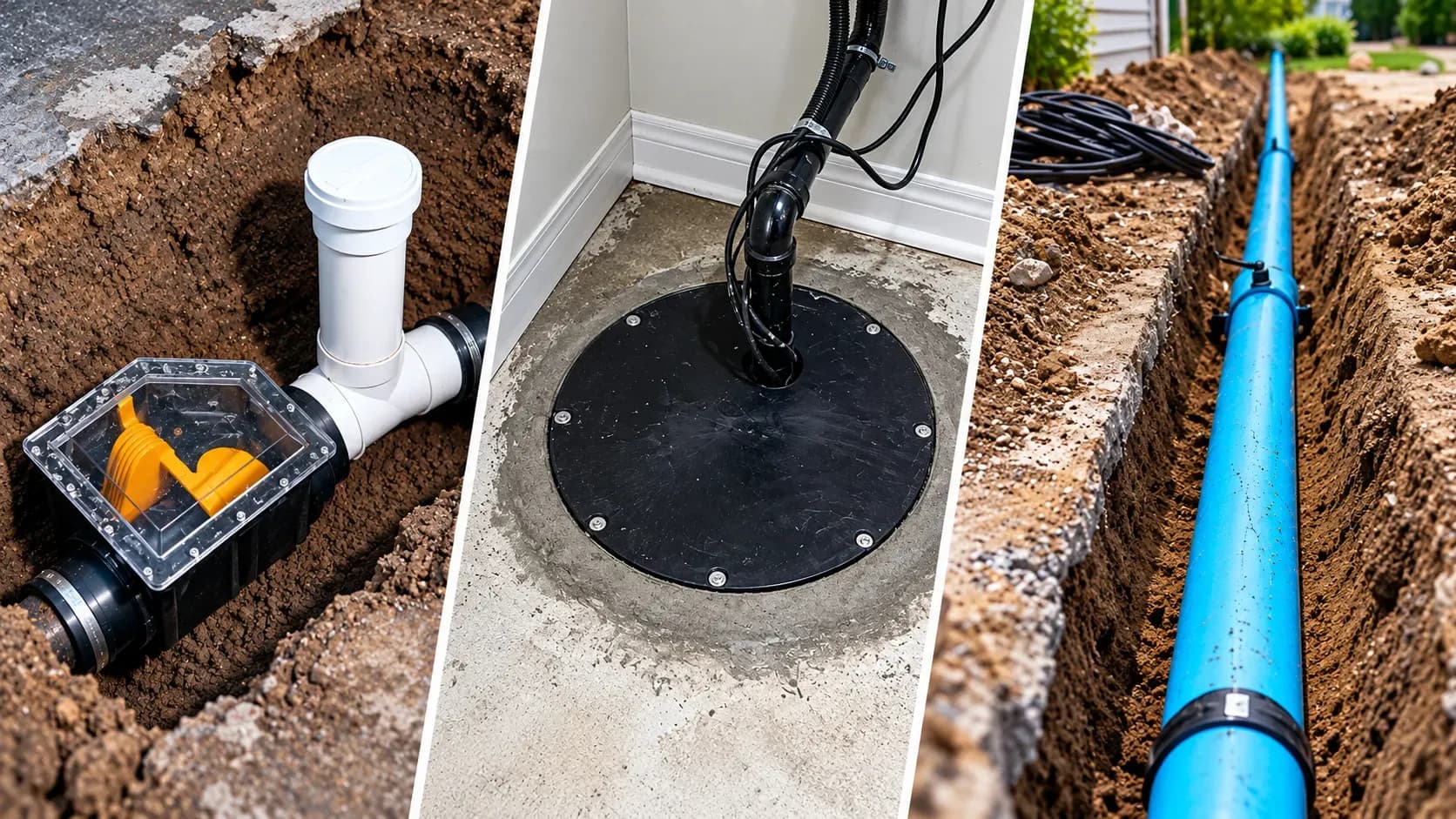
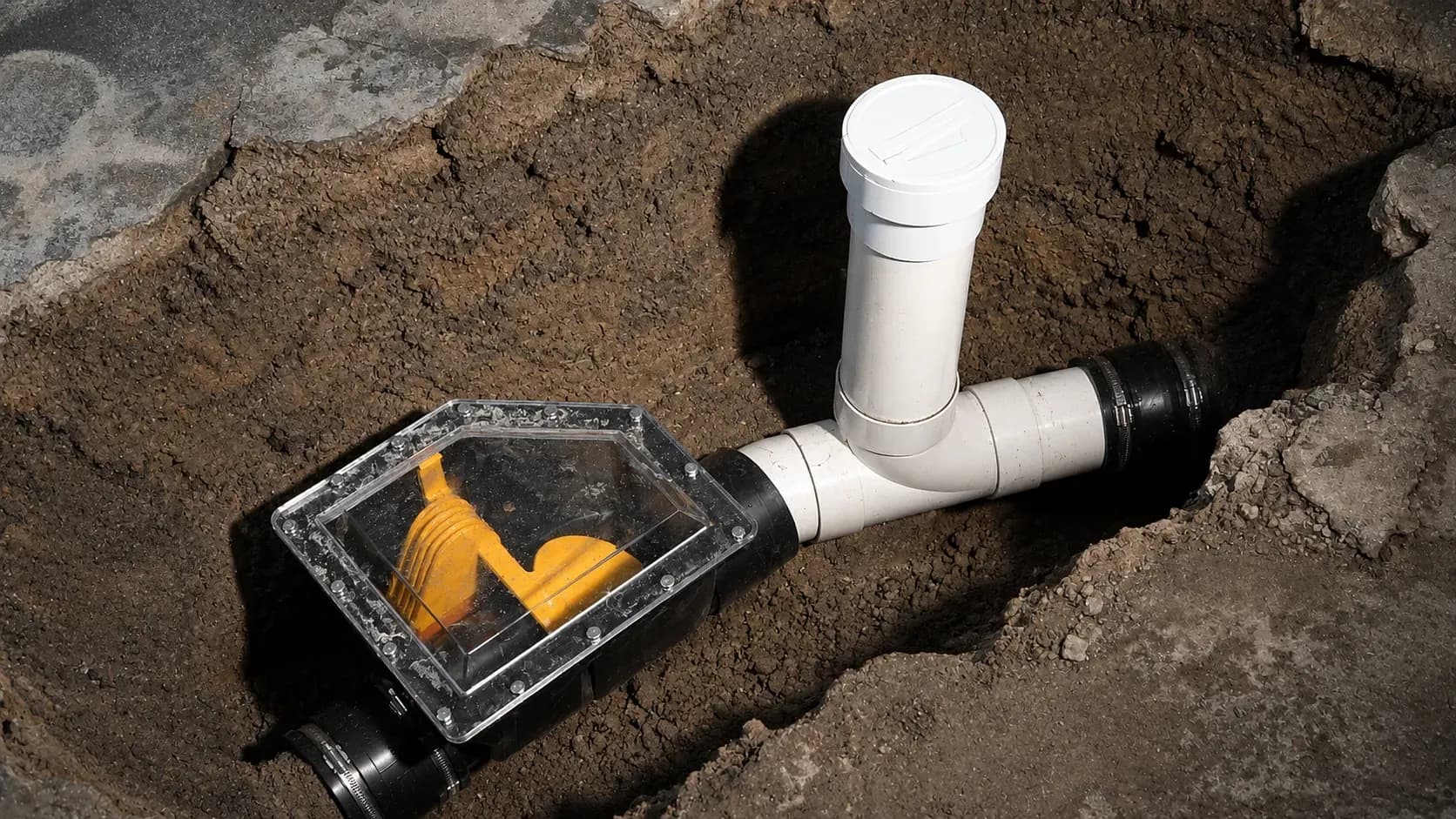
A backwater valve is installed on the main sewer line inside the basement. Wastewater leaves the house as normal, but when the municipal sewer overflows during heavy rain, a flap inside the valve closes and stops sewage from flowing back in.
Homeowners often call it a sewer backup valve, because that describes what it prevents. A backwater valve does nothing about groundwater. If water enters through foundation walls or the floor slab, the source is outside the sewer system, and a different solution is needed.
A sump pump sits in a pit set into the basement floor, usually in a corner. Groundwater collected around the foundation drains into the pit, and when the water level rises, the pump switches on and sends the water outside through a discharge pipe.
A sump pump is only as effective as the drainage that feeds it. Without a working weeping tile system around the foundation, there is little water reaching the pit, and moisture can still build up against the walls.
Weeping tile is a perforated pipe laid around the footing of the house. It collects groundwater before it can press against the foundation and carries it away, either to a sump pit or, in many older homes, directly into the sewer connection.
Weeping tile installation is typically done when a house is built, but older systems can clog with silt, fill with roots, or collapse over time. When that happens, water finds its way through the walls or up through the floor, even if a sump pump is present. Weeping tile replacement involves excavating around the foundation to reach the old pipe, so the scope depends on the depth and length of the section being replaced.
The sump pump vs weeping tile comparison is slightly misleading, because the two are parts of the same drainage system. The weeping tile collects the water, and the sump pump removes it.
The short answer to the backwater valve vs sump pump question is that the two devices solve different problems. A backwater valve keeps sewage out, and a sump pump removes groundwater.
When you compare a sump pump vs backwater valve this way, it becomes clear that the three systems are not competing options. In many homes, the most reliable protection comes from using them together.
Weeping tile connected to the sewer: Many older homes in London and Niagara have weeping tile that drains into the sanitary sewer. When a backwater valve closes during a storm, groundwater from that connection has nowhere to go and can flood the basement. For this reason, the weeping tile is often disconnected from the sewer and redirected to a new sump pit at the same time the valve is installed.
Municipal programs: Flood protection programs in London and St. Catharines are built around this combination. Both offer funding for weeping tile disconnection with a new sump pump, and St. Catharines requires any weeping tile connected to the sanitary lateral to be disconnected before a backwater valve qualifies.
Separate problems, separate fixes: A home with a newer weeping tile system already connected to a sump pump may only need a backwater valve. A home that has never had sewer backup but has damp walls may only need drainage work.
These two devices are often confused because the names sound similar, but they protect different systems. A backwater valve is installed on the sewer drain and keeps sewage out of your basement.
A backflow preventer is installed on the water supply line. It keeps used or contaminated water from flowing back into the clean drinking water system, and it is commonly used on irrigation systems and commercial buildings. A backflow preventer does not protect a basement from flooding.
The symptoms in your basement usually point to the right solution.
Sewage or odours from the floor drain after heavy rain: This points to sewer backup, and a backwater valve is the main fix. If your weeping tile drains into the sewer, disconnection and a sump pump are usually part of the same project.
Water at the joint between the wall and the floor: This usually means groundwater pressure around the foundation. A working weeping tile system and a sump pump are the main defence. In older homes, this can mean a new weeping tile installation around part or all of the foundation.
A sump pump that runs constantly or not at all: The pump may be worn out, undersized, or fed by a clogged drainage system. An inspection shows whether the pump or the weeping tile is the problem.
No clear pattern: A sewer camera inspection shows how the drains and weeping tile are connected, where any damage is, and which system is missing. At Drain Ridge, a sewer camera inspection costs $200.
At Drain Ridge, a backwater valve installation typically costs $2,500 to $3,300. The sump pump installation cost is typically $2,500 to $3,500, depending on the pit location, the discharge route, and whether weeping tile needs to be redirected to the new pit.
Weeping tile work varies the most, because the price depends on how much of the foundation needs to be excavated. For a detailed quote on any of these systems, contact Drain Ridge and request a free estimate.
A sump pump is a mechanical device, and regular checks keep it ready for spring thaw and heavy storms.
Checking the system two or three times a year, including before spring, is a good habit. Sewer backup valves need the same kind of routine attention, so it is practical to check both on the same day.
Choosing the right protection starts with knowing where the water is coming from. Drain Ridge serves homeowners across London and Niagara with upfront pricing, licensed and insured technicians, and 24/7 emergency service. To request a free estimate, call us at (289) 906-3479. Your estimate will explain which systems your home needs and what each one costs before any work begins.
A backwater valve is one of the most effective ways to protect a basement from sewer backup during heavy rain.
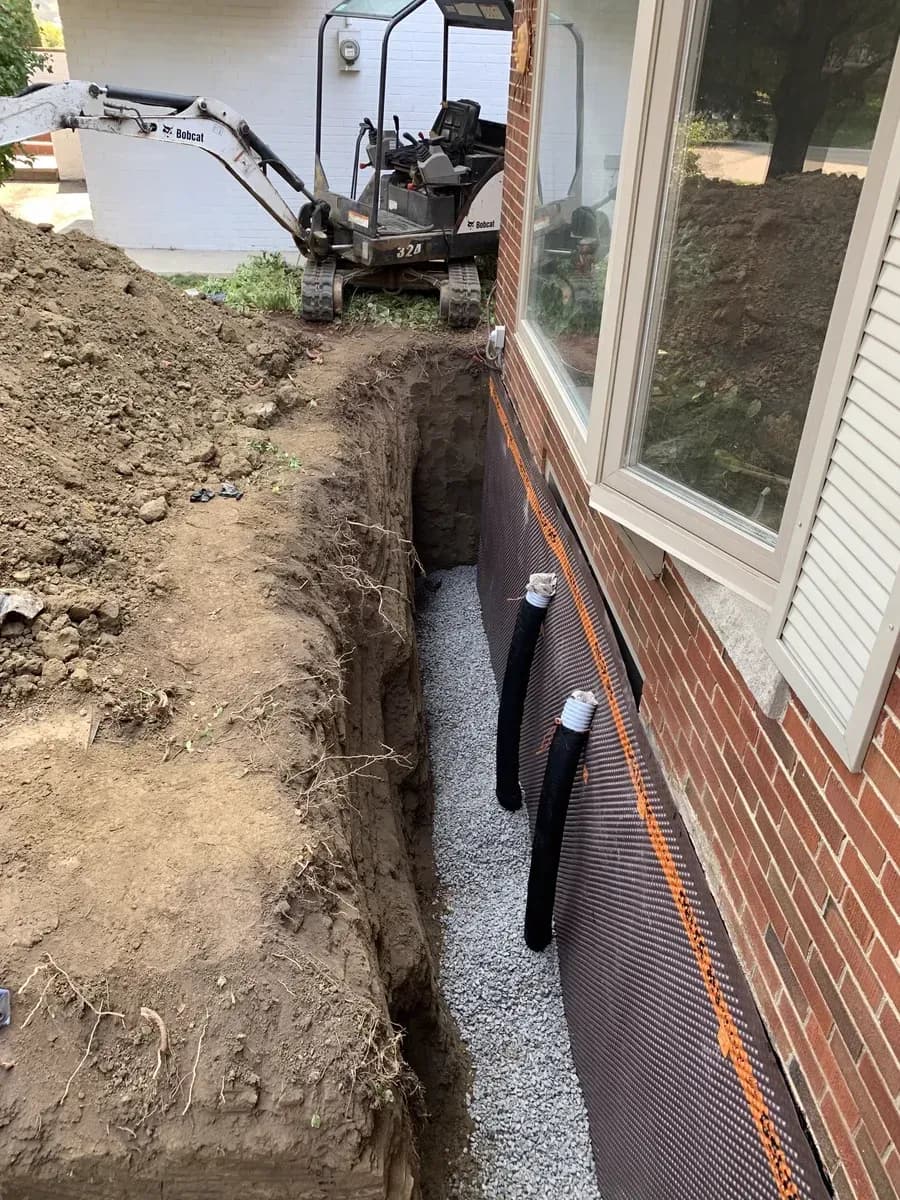
A leaky basement is one of the most common problems in older homes, and it rarely fixes itself.
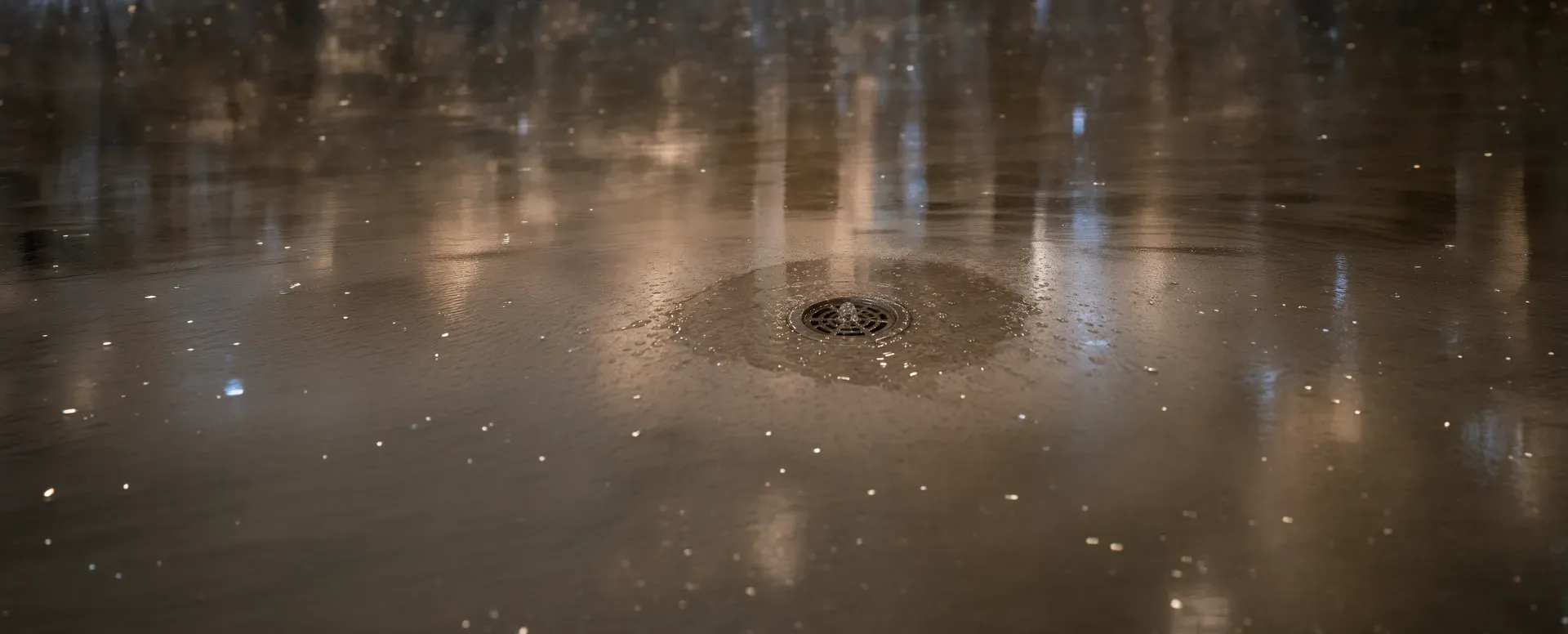
A sewer backup is one of the most disruptive problems a homeowner can face, and it often starts with small warning signs that are easy to miss.
Fill out the form below and we'll get back to you shortly.Fill out the form and we'll get back to you shortly.
Or call us directly at
+1 (289) 906 3479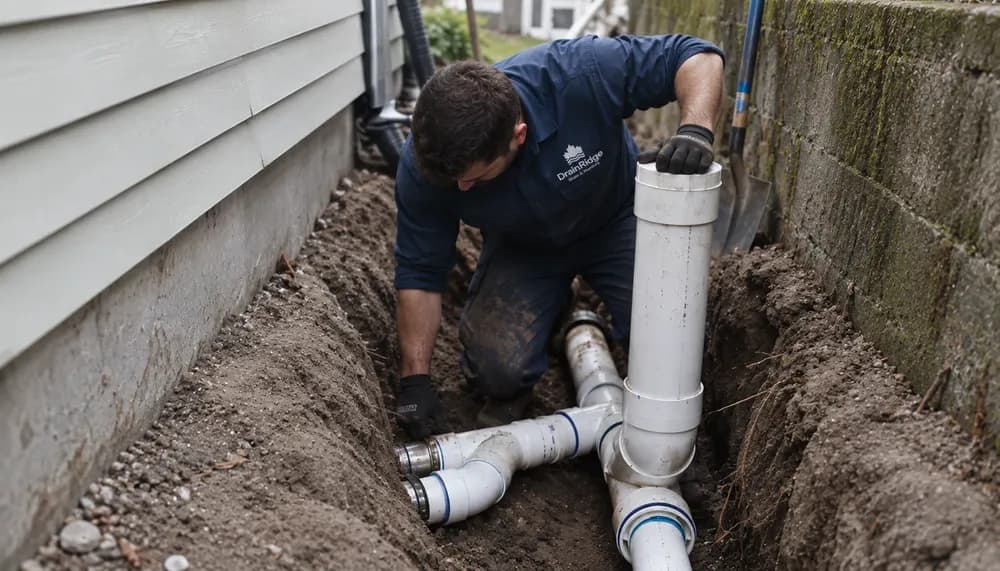
A backwater valve is a one-way valve installed on the main sewer line in your basement. It lets wastewater leave the house and closes when sewage from the municipal sewer starts flowing back in.
Inside the valve is a hinged flap that stays open during normal use. When sewage flows back from the street, the flap rises and seals the line, and it opens again once the sewer level drops.
Look for a round or rectangular access cover set into the basement floor, usually near the wall facing the street. If you cannot find one, we can confirm it with a camera inspection.
Weeping tile is a perforated drainage pipe installed around the footing of a house. It collects groundwater and carries it away from the foundation, usually to a sump pit.
Many homes benefit from both, because they solve different problems. We recommend both when a home has a history of sewer backup and weeping tile that currently drains into the sewer.
Drain Ridge provides sump pump installation across London, Niagara, and surrounding areas. Call us at (289) 906-3479 to book a free estimate.
No, a backwater valve only stops sewage from flowing back from the municipal sewer. Groundwater leaks through walls or the floor need drainage solutions, such as weeping tile and a sump pump.
Yes, Drain Ridge offers 24/7 emergency service across London and Niagara. Call us at (289) 906-3479, and we will get to you as quickly as possible.